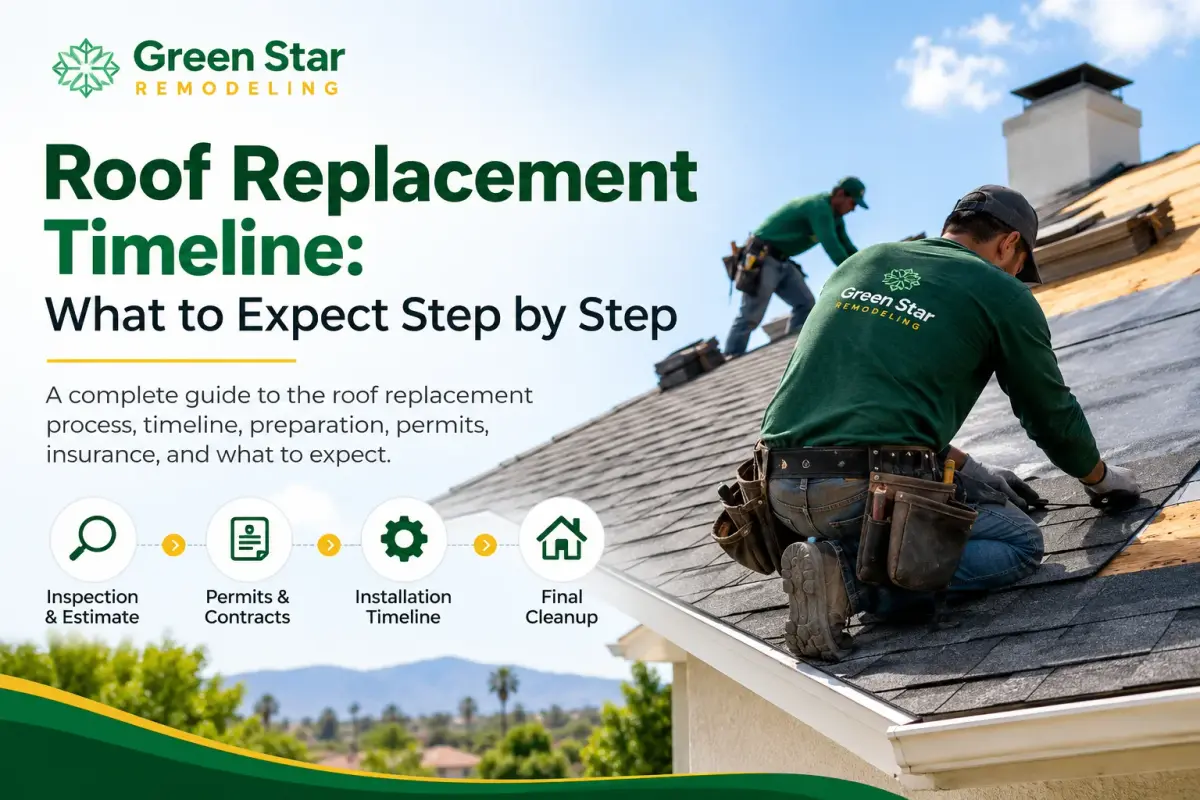
Planning a roof replacement? You’re probably wondering what happens during installation, how long it takes, what disruptions to expect, and how insurance works. This guide walks you through the entire process from inspection to final cleanup.
Initial Assessment: Repair vs. Replace
Your roof doesn’t always need full replacement. Sometimes repairs extend its life by several years. Understanding when to repair versus when to replace prevents unnecessary spending.
What Happens During a Professional Roof Inspection
A thorough roof inspection takes 1-2 hours and examines:
- Shingle condition and granule loss
- Exposed nails and flashing integrity
- Attic decking for leaks or rot
- Ventilation and moisture problems
- Signs of weather damage or deterioration
What you should receive after inspection:
- Detailed written assessment with photos
- Specific recommendations (repair vs. replace)
- Material samples and warranty options
- Transparent cost estimate
- Timeline for work
When to Repair vs. When to Replace
Replace your roof if:
- Less than 3 years of lifespan remain
- Repairs won’t extend the roof’s life meaningfully
- Soft spots or rot present safety hazards
- Repair costs approach replacement costs
- Roof age reaches insurance non-renewal thresholds in your area
Repair if:
- Damage is localized to specific areas
- Rest of the roof system remains structurally sound
- Roof has several years of remaining life
- Weather events caused isolated damage
Contracts, Permits, & Regulatory Compliance
4 Essential Items Every Roofing Contract Must Include
- Itemized scope and total cost: Labor, tear-off, disposal, materials listed separately. No surprises later.
- Decking replacement protocol: What happens if rotten plywood is discovered. Unit pricing for additional sheets (per square foot or per sheet). Clear terms so you know costs upfront.
- Material specifications: Brand, style, color, warranty tier (manufacturer + labor warranty). Verify what you’re getting.
- Project terms: Permit fees included, how change orders work, payment schedule, the 3-day right to rescind (your legal right to cancel within 3 days).
Building Permits & Municipal Codes
Yes, your city most likely requires a building permit for roof replacement. Nearly 90% of US municipalities require permits for full roof replacements. Permits exist to ensure work meets local building codes and trigger post-installation inspections.
Can a city demand a roof replacement? Yes. Local building authorities can issue notices if a roof presents severe structural hazards, violates code, or fails safety standards. Acting on these notices protects your property and prevents fines.
Contractor responsibility: Licensed contractors pull permits as part of their standard process. The contractor’s license is attached to the permit, making them legally responsible for code compliance. Never hire a contractor who suggests skipping permits to save money.
Homeowner Preparation Checklist
Inside the House
- Remove wall art and fragile items from top floors (hammering vibrations can shift items)
- Cover stored attic items with tarps to catch dust and wood chips
- Notify family members about noise and activity
- Secure pets away from active work areas
Outside the House
- Clear driveways for dumpsters and material delivery trucks (15+ feet clearance)
- Move patio furniture, grills, and plants away from rooflines
- Mow lawn ahead of time (makes magnetic nail sweeps more effective)
- Disable motion-activated sprinklers and unlock yard gates
- Protect landscaping from debris and foot traffic
Notify Neighbors
- Inform neighbors about project dates
- Explain potential tarps on adjacent properties (wind happens)
- Mention noise expectations (expect hammering 7 AM, 5 PM)
Day-by-Day Installation Timeline
Active installation typically takes 1-3 days for standard residential homes. Timeline varies based on roof size, complexity, and material type. Asphalt shingles are fastest (1-2 days). Metal roofs take 3-7 days. Tile roofs take 6-12 days.
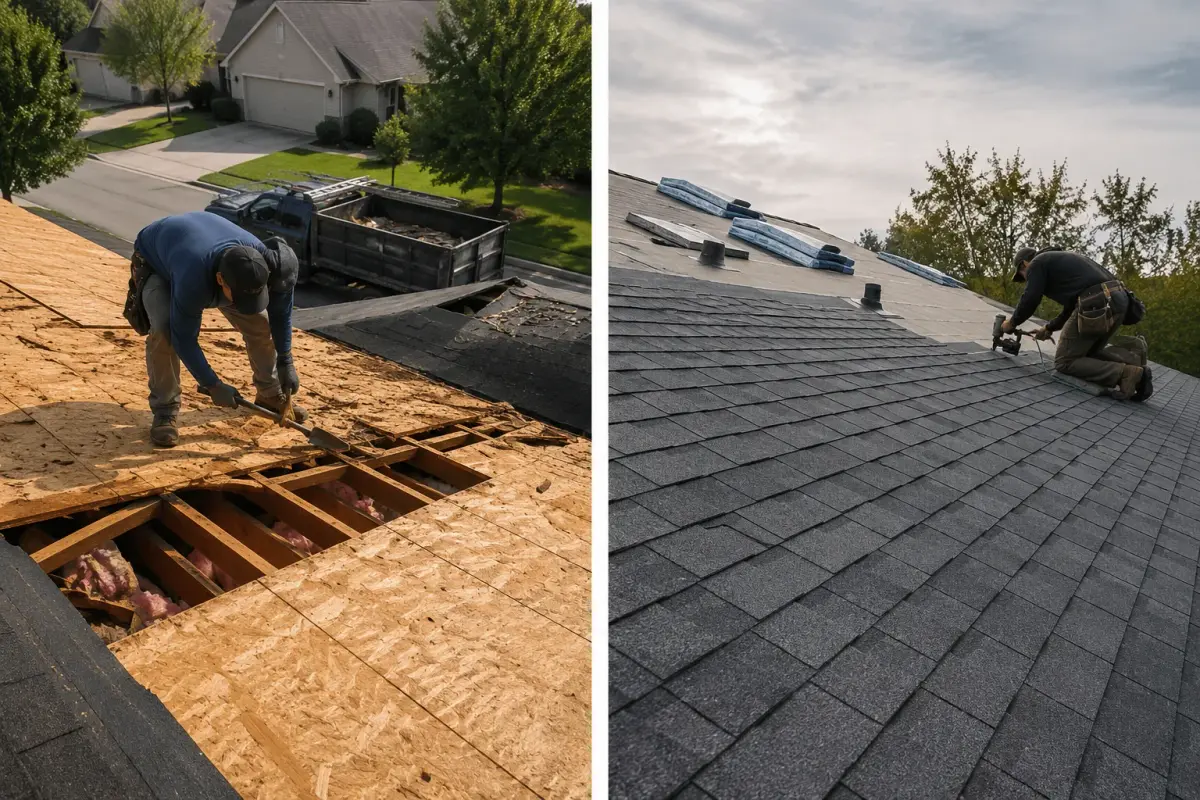
Day 1: Crew Setup, Full Tear-Off, Decking Inspection
- 7:00 AM: Crew arrives, sets protective tarps, establishes OSHA fall protection equipment
- Early morning: Stripping old materials down to bare wood deck
- Mid-day: Inspecting exposed decking; documenting any rot or damage
- Afternoon: Replacing rotted plywood sections as discovered
- End of day: Site cleanup to prevent debris spread
Day 2: Underlayment, Waterproofing, Flashing
- Morning: Installing ice/water shields in valleys and eaves (critical water barrier)
- Mid-morning: Laying synthetic underlayment over entire roof deck
- Afternoon: Installing drip edges, pipe boots, valley flashing
- Late afternoon: Chimney counter-flashing and final waterproofing details
- End of day: Securing all waterproofing before nightfall
Day 3: Shingle Installation, Ventilation, Cleanup
- Morning: Laying primary roofing material (asphalt shingles, metal, or tile)
- Mid-day: Installing ridge vents and cap shingles (roof ventilation completes here)
- Afternoon: First magnetic nail sweep to catch loose fasteners
- Late afternoon: Second magnetic sweep for thorough cleanup
- End of day: Supervisor walkthrough with photo documentation of completed work
Full Project Timeline
Active on-site installation: 1-3 days Total project timeline: 2-6 weeks
The full timeline includes estimates, permit processing, material delivery, weather delays, inspections, and final approval. Don’t expect a permit to process overnight, especially in busy seasons.
Should You Stay Home During Roof Replacement?
Yes, you can stay home. But understand the reality:
Noise & Disruption
Expect constant hammering and nail-gunning from 7 AM to 5 PM. Ceilings vibrate noticeably. Phone calls and video meetings become difficult. Working from home during active tear-off requires flexibility.
Work-From-Home Considerations
If you must work from home:
- Use ground floor or different building if possible
- Schedule important calls during lunch or early morning
- Use video conferencing from quietest room available
- Expect momentary distractions despite planning
- Have backup location (office, library, coffee shop) for critical meetings
Pet & Children Safety
- Keep pets indoors or away from active work zones during tear-off hours
- Don’t let children play outside during installation
- Debris and loose materials create hazards
- Magnetic nail sweeps help, but loose fasteners still present risks
- Consider arranging alternate care for young children during loudest hours (7-10 AM typically)
Realistic Recommendation
If you can arrange to be elsewhere during active tear-off (Day 1 particularly), do so. The disruption is significant, and your day-off preserves your sanity. If you must stay home, plan accordingly.
Timeline Factors That Extend Projects
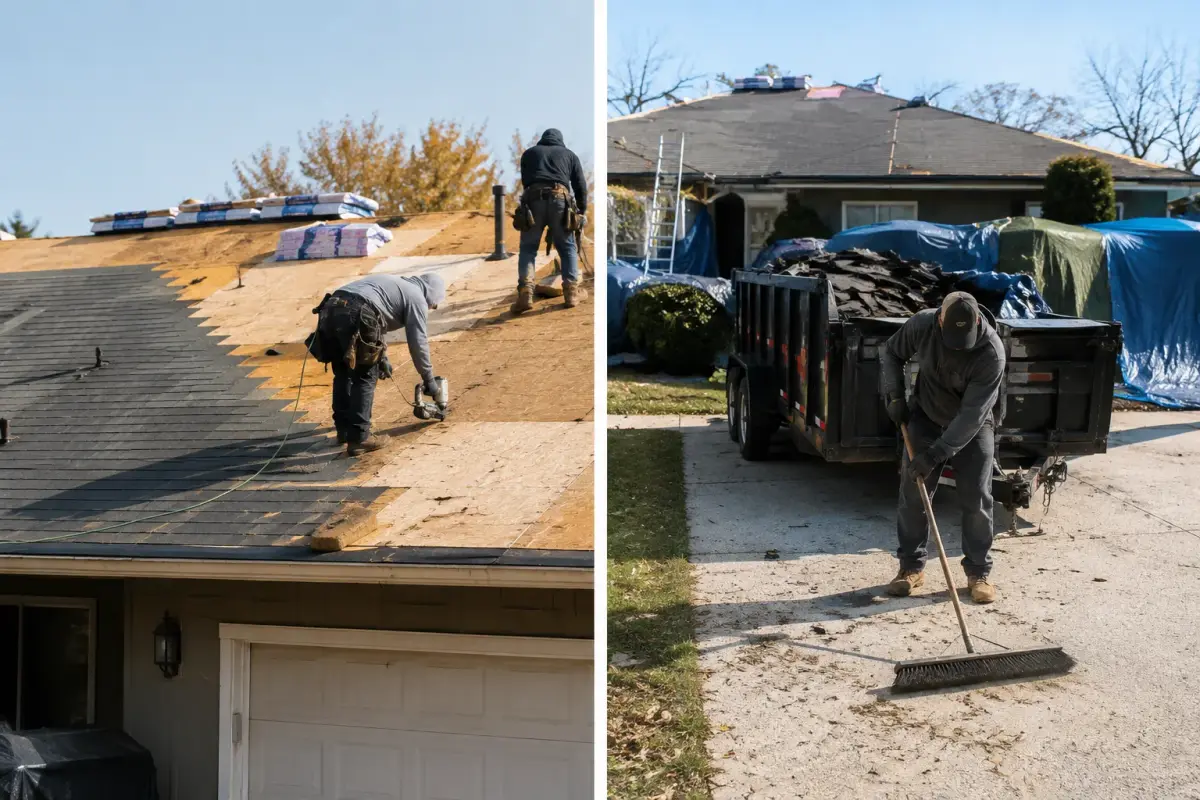
Weather delays are the most common reason projects take longer than expected. Rain stops work. Wind creates safety hazards. Extreme heat slows crews. Always build a buffer into your timeline.
Roof complexity, Multiple peaks, valleys, chimneys, and skylights require careful navigation. Complex roofs take longer than simple ranch-style roofs.
Hidden structural issues:Discovered rot or water damage requires repair before new material installs. Budget contingency for this.
Material delivery: Custom or specialty materials may require special ordering. Standard asphalt shingles ship quickly.
What’s Included vs. Extra Costs
Standard Replacement Includes
- Complete tear-off of existing layers
- Synthetic underlayment and drip edge installation
- New shingles or primary material
- Ridge vents and cap shingles
- Site protection and magnetic nail sweeps
- Dumpster haul-away
- Final walkthrough and photo documentation
Potential Extra Costs
- Replacing rotted plywood/decking (unit priced per sheet)
- Repairing structural damage (sagging rafters/trusses)
- Upgrading or replacing skylights
- Replacing chimney flashing
- Repairing gutters, soffits, or fascia boards
- Addressing ventilation system upgrades
Always ask your contractor for unit pricing on potential extras before work begins. This prevents surprises mid-project.
Working With Insurance During Replacement
Understanding Your Coverage
ACV (Actual Cash Value): Insurance pays the depreciated value of your roof at the time of damage. A 15-year-old roof may have lost significant value, leaving you to cover substantial costs.
RCV (Replacement Cost Value): Insurance pays full cost to replace your roof with new materials of same type and quality, minus only your deductible. Most homeowners have RCV coverage.
Check your policy now. Don’t wait for a claim to discover which you have. The difference between ACV and RCV can mean thousands of dollars.
How to Negotiate With Your Insurance Company
- Provide detailed documentation: Have a licensed roofer document all damage with photos before covering anything
- Get itemized estimates: Multiple estimates show the true replacement cost
- Document storm damage vs. wear-and-tear: Insurers pay claims for sudden weather events, not gradual aging
- Understand supplemental estimates: If hidden damage is discovered during tear-off, your adjuster can issue additional payments
- Know your deductible: This amount comes out of your pocket. Understand whether your deductible applies per claim or per occurrence
Frequently Asked Questions
Q: How long does a roof replacement take?
A: Active installation takes 1-3 days for asphalt shingles on average homes. Total project time (permits, estimates, materials, weather delays, inspections) ranges 2-6 weeks. Weather and roof complexity are the main variables.
Q: Can I stay home during roof replacement?
A: Yes, but expect extreme noise and vibration throughout the day. If you work from home or have sensitive pets, relocating during active work hours (7 AM, 5 PM) is recommended, especially on Day 1 tear-off.
Q: What’s included in roof replacement?
A: Standard replacement includes tear-off, underlayment, drip edge, new shingles, ridge vents, cleanup, and magnetic nail sweeps. Extras like decking replacement, flashing upgrades, and structural repairs cost additional.
Q: Can a city demand a roof replacement?
A: Yes. Local building authorities can issue notices if a roof presents structural hazards, violates code, or fails safety standards. These notices protect your property and must be addressed.
Q: How do I negotiate roof replacement with insurance?
A: Provide detailed inspection reports with photos from a licensed roofer. Document all hidden damage before covering it. Work with your adjuster to ensure itemized replacement cost value coverage. Understand your policy’s ACV vs. RCV distinction before filing.
Q: What happens if I find rotted decking during replacement?
A: This is normal. Your contract should specify unit pricing for additional decking sheets. The roofer documents the damage and installs new plywood as needed. This extends your project timeline by 1 day typically.
Q: Is a permit required for roof replacement?
A: Yes, in nearly 90% of US municipalities. Permits ensure work meets local building codes. Licensed contractors pull permits as standard practice. The permit fee is small compared to risks of unpermitted work.
Schedule Your Roof Assessment
Understanding your roof’s condition before problems develop prevents emergency situations. A professional inspection identifies issues early, giving you time to plan and budget properly.
Green Star Remodeling provides comprehensive roof assessments for homeowners in Los Angeles and Santa Clarita. We explain exactly what your roof needs and why, with no pressure or hidden agendas.
Schedule your free roof inspection. Our team will assess your roof’s condition and answer all your questions about timing, process, and expectations.